How a Garage Door Spring Actually Works (and Why It Matters)
Before you can recognize a broken spring, it helps to understand what the spring is doing. Most residential garage doors use one of two systems. Torsion springs mount horizontally on a metal shaft above the door opening and wind up tightly to store energy; as the door moves, that stored tension is released through cables and drums to counterbalance the door's weight. Extension springs run along the horizontal tracks on either side and stretch and contract to do the same job. Either way, the spring is doing the real work. The opener motor is mostly a guide; it tells the door when to move, but it relies on a properly tensioned spring to do the lifting.
This is the key insight behind almost every symptom on this page: when a spring breaks or loses tension, the full dead weight of the door suddenly lands on the opener and the cables, which are not designed to carry it. That is why a broken spring so often looks like an opener failure, a cable problem, or a door that has 'gotten heavy' overnight. Understanding the counterbalance relationship is what separates a correct diagnosis from an expensive guess.
Spring lifespan is usually measured in cycles, not years. One cycle is one full open and one full close. A standard spring is commonly rated for somewhere in the range of roughly 10,000 cycles, which can translate to many years for a lightly used door or just a few years for a busy household that opens the door a dozen times a day. There is no fixed expiration date, only accumulated wear, which is why two identical doors on the same street can fail years apart.
The Unmistakable Signs Your Spring Is Already Broken
Some symptoms are so distinctive that, taken together, they point almost certainly to a broken spring. If you are seeing several of these at once, treat the door as unsafe and stop using it until it has been inspected.
- A loud bang from the garage, often described as a gunshot or a heavy 'pop,' frequently heard when nobody is even operating the door. The sudden release of stored tension is genuinely loud, and many homeowners first notice it from inside the house.
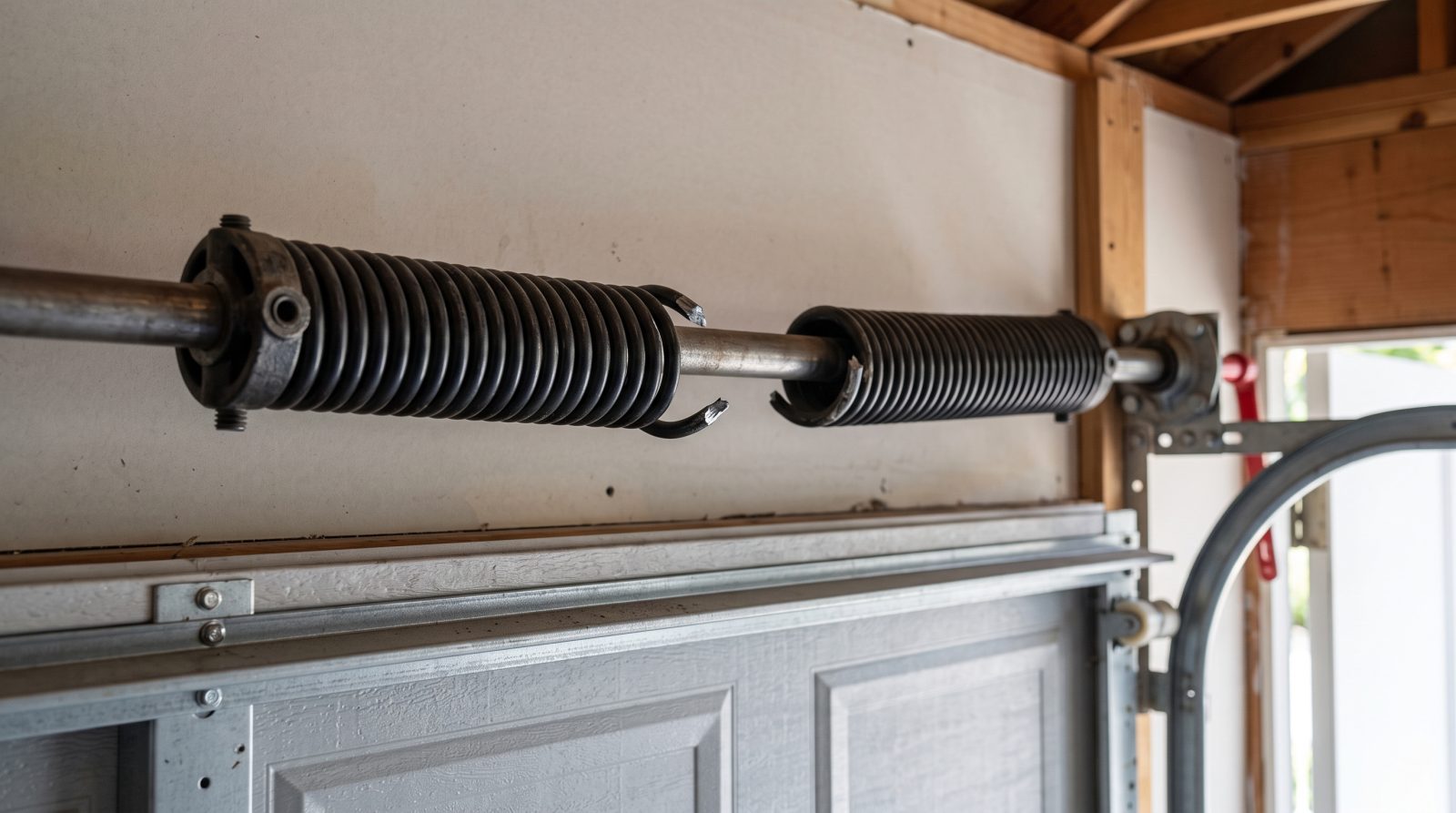
- A visible gap or separation in the spring. On a torsion spring above the door, look for a roughly two-inch gap where the coil has split into two pieces. This is the single clearest confirmation of a break.
- The door won't open with the opener, or the opener strains, hums, and then stops. Without the spring's counterbalance, the motor is being asked to lift the entire weight of the door by itself, which it is not built to do.
- The door opens only a few inches and then stops or reverses. Many openers have a force limit and will give up once they sense the abnormal load.
- If you pull the manual release cord, the door feels extremely heavy, slams shut, or won't stay open on its own. A balanced door should feel manageable and hold its position; a door with a broken spring will not.
- The door looks crooked or comes down faster on one side. With a two-spring system, one spring can fail while the other still works, leaving the door lopsided and unsafe.
- Frayed, loose, or hanging cables. When the spring lets go, the cables lose tension and can slip off the drums or dangle, which is a downstream symptom of the spring, not a separate problem.
The Early Warning Signs Most Homeowners Miss
Springs rarely fail without giving you some advance notice, but the early signals are easy to dismiss because the door still technically works. Catching these is the difference between scheduling a calm repair on your own timeline and getting stranded with a car trapped in the garage on a busy Bay Area weekday.
Pay attention to how the door sounds and behaves over time, not just whether it opens. A door that is starting to lose spring tension will often telegraph the problem for days or weeks before it breaks outright.
- New squeaking, grinding, or popping noises during operation that weren't there before, especially sounds coming from the top of the door where torsion springs live.
- The door feels heavier or hesitates, or the opener seems to be working harder than it used to. This is often the spring gradually losing its rated tension.
- Jerky or uneven movement, or the door bouncing slightly as it travels, which can indicate a spring nearing the end of its cycle life.
- Visible wear on the spring itself: rust, gaps starting to open between coils, or a stretched, tired look compared to when it was new. Coastal Bay Area humidity and salt air can accelerate rust, which shortens spring life.
- The door no longer holds its position when stopped halfway. A healthy balanced door stays put; a door that drifts up or down is losing balance.
- The opener's safety reverse behaving erratically, since a door that is becoming unbalanced can confuse the force and travel settings the opener relies on.
Why Garage Door Springs Break
Understanding the cause helps you set realistic expectations and avoid blaming the wrong part. In the vast majority of cases, a broken spring is simply the result of normal wear, not a defect or misuse.
The most common cause is metal fatigue from accumulated cycles. Every open and close winds and unwinds the spring, and over thousands of cycles the steel slowly weakens until it finally fractures, usually with no warning at the moment it lets go. This is why springs are sold by cycle rating rather than a time-based measure.
Bay Area conditions add their own pressures. Homes closer to the coast and the bay deal with marine humidity and salt-laden air, which encourages rust; rusted coils create friction and weak points that fail sooner. Significant temperature swings between a cold morning and a warm afternoon also make brittle metal more likely to snap, which is why so many springs break first thing on a cool morning. Older homes throughout the region sometimes still run on a single spring or on undersized springs that were never quite matched to a heavier door, and those wear out faster.
Two other factors matter. Poor or skipped maintenance, such as never lubricating the springs and moving parts, accelerates wear and rust. And improper prior installation, including a spring that was the wrong size or a mismatched pair, puts uneven load on the system and shortens its life. None of these are things you did wrong day to day; they are simply why one door outlasts another.
Why You Should Never DIY a Spring Replacement
This is the part we never soften, because it genuinely matters. Garage door springs store an enormous amount of mechanical energy under high tension. A torsion spring that is wound or unwound incorrectly, or a winding bar that slips, can release that energy violently and cause serious injuries to hands, face, and eyes, or worse. This is widely considered one of the most dangerous home repairs a homeowner can attempt, and it requires specific winding bars and technique to do safely.
Beyond the safety risk, spring replacement is easy to get wrong in ways that cost more later. Springs must be correctly sized to the exact weight and height of your specific door; an undersized or oversized spring will leave the door unbalanced, overwork the opener, and fail prematurely. On a two-spring system, best practice is to replace both springs at the same time even if only one broke, because the second is the same age and will likely fail soon, and a mismatched pair pulls unevenly. Getting cable tension, drum alignment, and final balance right is a precision job, not a parts swap.
A proper repair also includes checking the cables, drums, bearings, and overall balance while the system is apart, since a broken spring often stresses those neighboring parts. That holistic check is hard to replicate on your own and is exactly what prevents a repeat failure.
The bottom line: if you suspect a broken spring, the safest move is to stop operating the door, avoid pulling the manual release to force it open, and have it handled by a professional. As a mobile garage door service, we come to your home anywhere in the Bay Area, diagnose the spring system on-site, and replace it with the correctly rated parts so the door is safe and balanced again.
What to Do Right Now If You Think Your Spring Is Broken
If the signs above match what you're seeing, a few simple steps will keep you safe and protect the rest of the door until it can be repaired.
Taking these precautions also makes the eventual repair faster and cleaner, because you won't have added cable or opener damage on top of the broken spring.
- Stop using the door. Repeatedly trying to force it open with the opener can burn out the motor or pull the cables off their drums, turning one repair into several.
- Don't park your car where a failed door could trap it, and avoid leaving anyone or anything underneath the door.
- Keep hands, fingers, and clothing away from the springs, cables, and bottom of the door, where the stored energy and pinch points are most dangerous.
- Don't attempt to manually muscle the door up and prop it open; a door with a broken spring can come down hard and fast.
- Note what you're seeing, such as a visible gap in the spring, a lopsided door, or the bang you heard, so the technician can confirm the diagnosis quickly on arrival.
- Schedule a professional inspection. Spring failures don't fix themselves and tend to get worse, so the sooner it's looked at, the better. Call for a free quote and we'll come to you anywhere in the Bay Area.