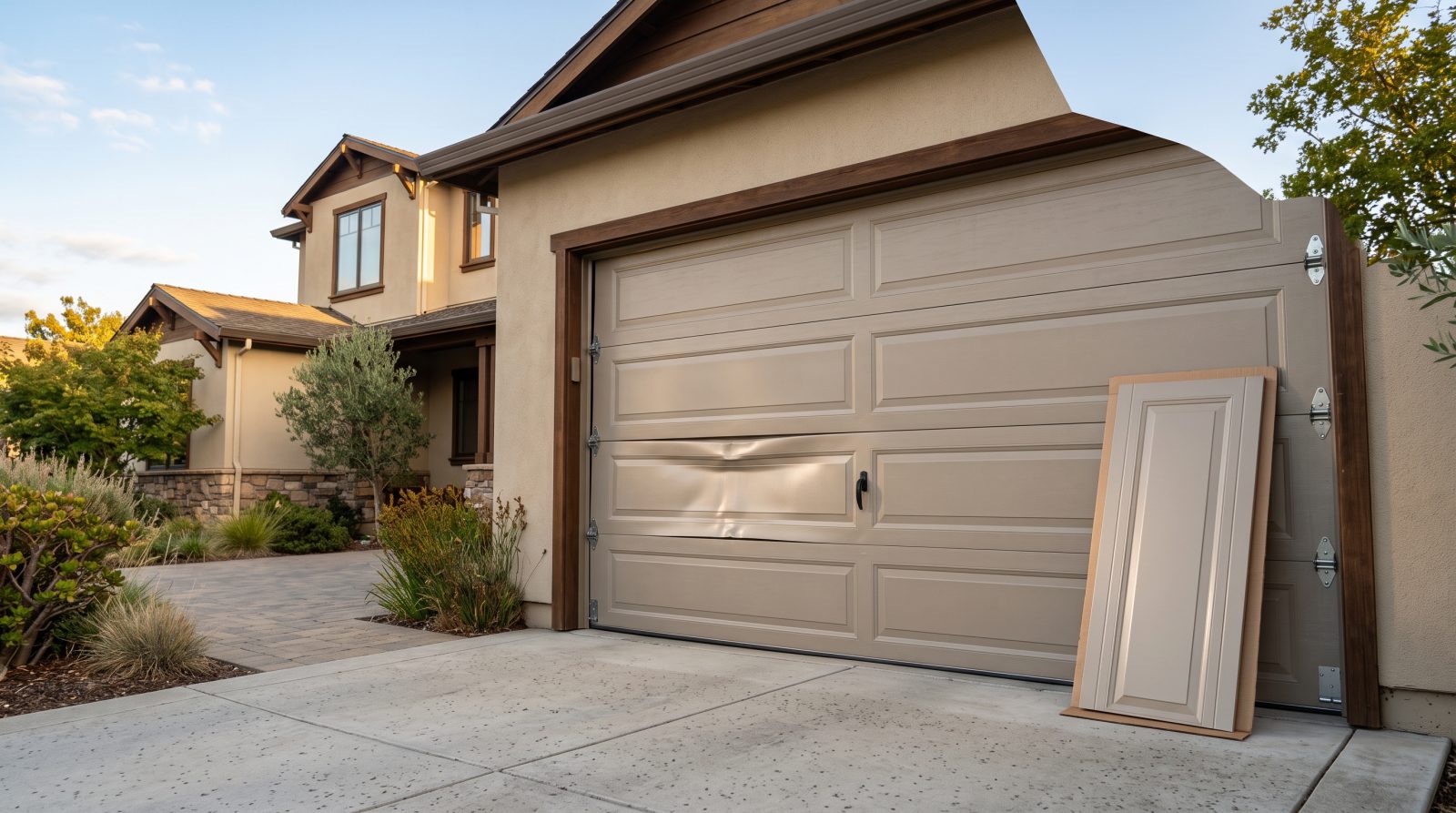
What "panel replacement" actually means
A sectional garage door, the most common style across the Bay Area, is built from horizontal sections stacked on top of each other. Each section is one "panel." The sections are connected by hinges and ride up the tracks on rollers, folding back overhead as the door opens. Because the panels are individual pieces, a single damaged section can often be unbolted and swapped out without disturbing the rest of the door, the springs, or the opener.
Panel replacement is different from cosmetic dent repair. Light dents in a steel door can sometimes be pushed or pulled back toward shape, but deep creases, torn skins, punctures, delaminated insulation, split wood, or rusted-through steel are past the point of straightening. In those cases the section itself has lost structural integrity, and the correct fix is to replace the panel rather than disguise the damage.
Not every door is a good candidate for single-panel replacement, though. The deciding factors are whether your exact panel is still manufactured, how the rest of the door has aged, and how much of the door is affected. We assess all three on site before recommending a path, so the repair is one that will actually hold up and look right.
- Sectional doors are built from stacked horizontal panels joined by hinges
- A single damaged section can often be replaced without touching springs or the opener
- Replacement is the right call when a panel is creased, punctured, split, delaminated, or rusted through
- Light surface dents in steel may sometimes be straightened instead of replaced
When to replace one panel vs. the whole door
The most common question we hear is whether it is smarter to replace the damaged section or just start fresh with a new door. There is no universal answer, but there are clear signals that point one way or the other, and a good technician should walk you through them.
Single-panel replacement tends to make sense when the damage is isolated to one or two sections, the door is relatively recent, and the model is still in production so a matching panel can be sourced. It is also the practical choice when only the bottom section is damaged from a backed-into-it bumper or a flooded garage, while the upper sections are still in excellent shape.
A full door replacement usually becomes the better value when the door is old enough that the design has been discontinued, when several panels are damaged, when the existing sections are already faded, chalky, warped, or rusting, or when a new panel would stand out so sharply against the weathered originals that the repair looks worse than the dent. A fresh panel bolted onto a tired door rarely satisfies anyone, so it is worth weighing that honestly before you commit.
- Lean toward single-panel: damage is isolated, door is newer, model still made, rest of door looks good
- Lean toward full replacement: multiple panels damaged, door discontinued, existing sections faded or rusting
- Bottom-section-only damage (vehicle bumps, water, impact) is a classic single-panel candidate
- If a new panel would clash badly with sun-faded originals, a full door is often the smarter spend
Matching the new panel to your existing door
Matching is where panel replacement lives or dies. A replacement section has to line up on several fronts at once: the door brand and model, the panel design (raised, recessed, flush, or carriage style), the steel gauge and insulation type, any window inserts and their grille pattern, and the finish color. Miss any one of these and the repair announces itself.
Color is the trickiest variable, and it is worth setting expectations clearly. A factory color from the manufacturer will match the original paint code, but it will be a fresh, un-weathered version of that color. Bay Area doors that face afternoon sun, salt air near the coast, or years of inland heat will have faded from their original shade, so even a correct factory color can look slightly brighter than the surrounding panels at first. Painted doors can be repainted to blend, and many doors settle visually as the new section weathers in.
We work to identify your door from the rollers, hinges, end stamps, and overall profile so we can source the closest available match. When an exact panel is no longer made, we lay out the realistic alternatives, whether that is a compatible substitute, repainting the whole door for uniformity, or moving to a full replacement.
- A true match considers brand, model, panel design, steel gauge, insulation, windows, and color
- Factory colors match the original code but arrive un-weathered, so a new panel can look brighter at first
- Sun, coastal salt air, and heat fade Bay Area doors over time, which affects how a match reads
- If your exact panel is discontinued, we explain the realistic options available
How the replacement is done, step by step
Because we are a mobile service, the work happens in your driveway. A typical single-panel replacement follows a consistent sequence designed to keep the door safe and aligned throughout.
First we secure the door and assess tension, since the springs store significant force and any section work has to respect that. We then disconnect the hinges and rollers connecting the damaged panel to its neighbors, remove the affected section, and set the replacement into place. The new panel gets its hinges, rollers, and any hardware transferred or fitted, and the section is reconnected to the door above and below it. Finally we re-check the door's balance, travel, and seal, run it through full cycles, and confirm the opener still reverses and stops correctly on the safety side.
If the impact that damaged your panel also bent a track, knocked a roller out, threw the door off balance, or stressed a spring, those issues are addressed as part of getting the door working safely again rather than ignored. A panel that looks perfect on a door that binds or slams is not a finished job.
- Mobile service: the replacement is performed on site at your home or business
- The damaged section is disconnected at the hinges and rollers, removed, and swapped out
- Hardware is fitted to the new panel and the section is reconnected above and below
- Balance, travel, weather seal, and the opener's safety reversal are verified before we leave
What affects the cost
Panel replacement pricing varies widely because the panel itself is the largest and least predictable part of the bill. Costs depend on the door brand and model, whether the panel is single-layer steel or an insulated multi-layer section, the panel size and weight, whether it includes windows, the finish, and how readily the matching section can be sourced. A common, currently produced steel panel is far easier and less expensive to obtain than a discontinued, windowed, insulated section that has to be special ordered.
As a general orientation only, single-panel replacement in our industry commonly runs in the low-to-mid hundreds of dollars for a basic, readily available section, and can climb higher for insulated, windowed, or hard-to-source panels once the part and labor are combined. Treat any figure you read online, including this one, as a typical industry estimate that varies by region, door, material, and scope, not a quote. The only accurate number is the one tied to your specific door after we identify it.
One practical note on value: if sourcing and fitting a single specialty panel approaches the cost of replacing a larger share of the door, that is worth knowing before you decide, so you can choose the repair that genuinely fits your situation.
- Biggest cost driver is the panel itself: brand, model, size, insulation, windows, and availability
- Currently produced steel sections are cheaper and faster than discontinued or special-order panels
- Any ranges you see are typical industry estimates that vary by region, door, material, and scope, never a fixed quote
- When a specialty single panel approaches the cost logic of a full door, that is worth weighing before you commit
Why a damaged panel is worth fixing sooner
A dented panel is easy to put off, but damage tends to compound. A creased or punctured section lets the door flex where it should be rigid, which adds stress to hinges and rollers and can gradually pull the door out of true. Damage that breaks the weather seal or the panel skin also opens the door to moisture, and in coastal and damp Bay Area microclimates that means rust can spread from the wound into surrounding steel.
There is a security and energy angle too. A compromised bottom section may not seal against the floor, leaving a gap that lets in weather, pests, and prying eyes, and an insulated door with a damaged panel loses some of the thermal buffer that keeps an attached garage comfortable. For a garage that doubles as a gym, workshop, or storage for valuables, that matters.
Finally, the curb-appeal cost is real in Bay Area neighborhoods where the garage door is one of the largest features facing the street. Addressing a single damaged panel early, while the match is still available and the rest of the door is healthy, is almost always cheaper and cleaner than waiting until the problem forces a full replacement. If you have a dented or damaged panel, call for a free estimate and we will assess your door and lay out the options.
- Flexing from a damaged section adds stress to hinges, rollers, and door alignment over time
- Broken seals and skin let moisture in, and Bay Area damp and coastal air accelerate rust
- A damaged bottom section can leave gaps that hurt security, weather sealing, and energy efficiency
- Fixing early, while the match is available and the door is healthy, beats waiting for a forced full replacement