What the Noise Is Actually Telling You
Garage doors don't make random noise. Each distinct sound maps to a specific cause, and learning to read those sounds is the fastest way to diagnose the problem. Before you grab a ladder, stand inside the garage with the door closed, then run a full open-and-close cycle and just listen. Note where in the travel the noise happens (start, middle, top) and whether it's metallic, rubbery, or a deep structural bang. That single observation narrows the cause more than any other step.
Keep in mind that volume and worry don't always correlate. A loud rubbery squeak is often a cheap dry-roller fix, while a quiet, intermittent clicking or a deep pop can signal a far more serious tension or hardware issue. The goal of listening first is to separate the harmless lubrication-and-tighten problems from the parts that carry dangerous spring force.
- Squeaking or squealing: almost always dry rollers, hinges, or bearings that need lubrication.
- Rattling or vibrating: loose nuts, bolts, hinges, or track brackets that have shaken free over time.
- Grinding or scraping: worn nylon/steel rollers, a track that's out of alignment, or a failing opener gear.
- Banging or popping: section hinges flexing, or a more serious sign of torsion-spring or cable trouble.
- Slapping or clanking chain noise: a loose opener chain or worn opener-rail components.
The Most Common Causes (and How Serious Each One Is)
The overwhelming majority of noise complaints come from neglected lubrication and routine hardware that has simply worked loose. A residential door cycles thousands of times a year, and every cycle shakes the assembly a tiny bit. Metal-on-metal rollers, dozens of hinge pins, and a long pair of tracks all dry out and loosen on a predictable schedule, especially when nobody's maintained them since the door was installed.
A second tier of causes involves genuine wear: rollers whose nylon tires have flattened or whose steel bearings have seized, hinges that have elongated their bolt holes, and opener drive components (chain, belt, or screw) that have stretched or worn. These are still very fixable but usually call for parts, not just spray.
The third tier is the one to respect. Torsion springs (the tightly wound spring mounted on a bar above the door) and the lift cables are under enormous tension. A grinding, popping, or sudden bang from the spring area, a door that suddenly feels heavy or crooked, or a visible gap in a spring coil are not lubrication problems, they are safety problems. These components store enough energy to cause serious injury and are not a DIY fix.
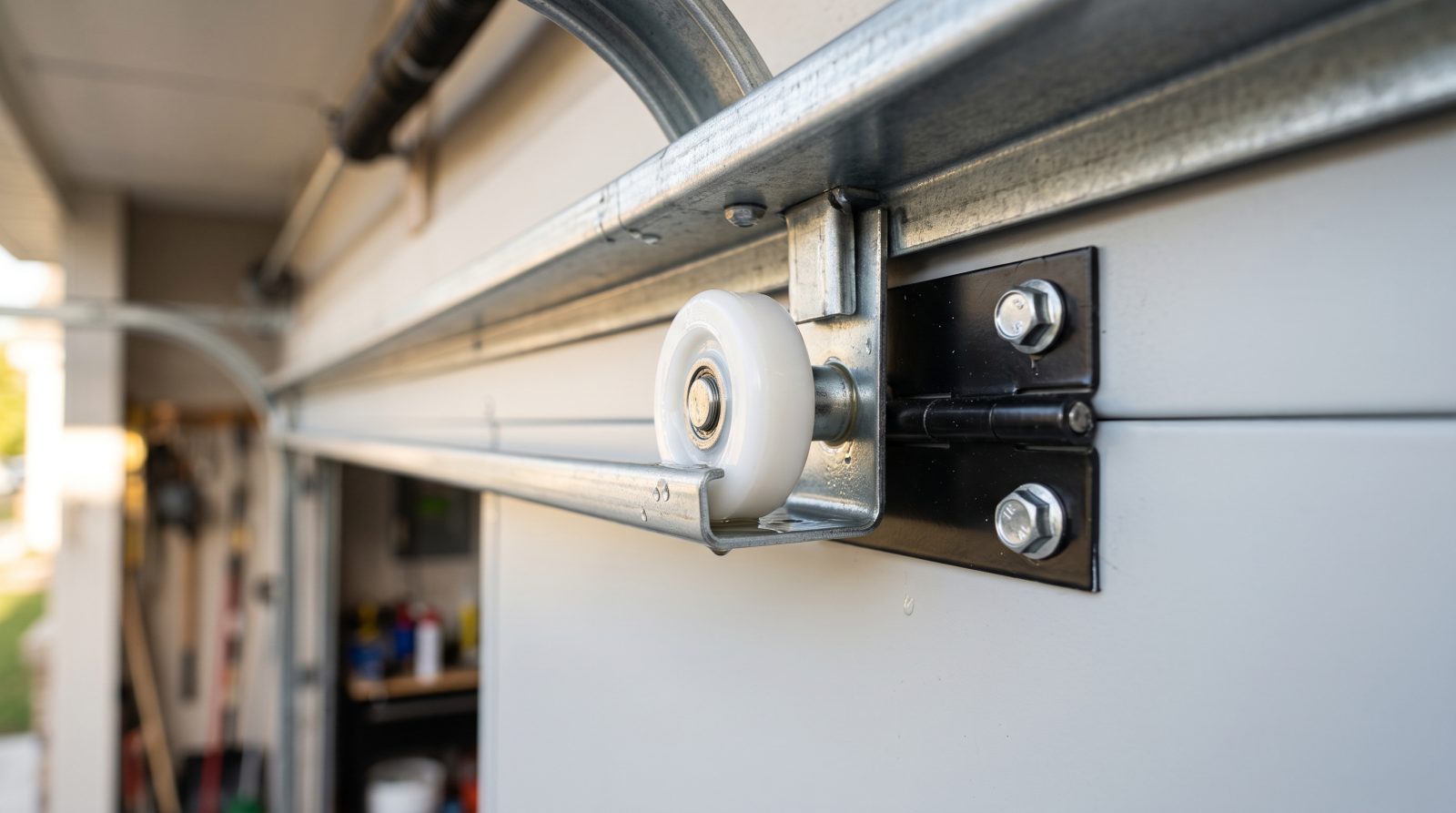
- Dry rollers and hinges, low-risk, the single most common cause of squeal.
- Loose hardware (nuts, bolts, brackets), low-risk, common cause of rattle and vibration.
- Worn rollers or bearings, moderate, needs replacement parts.
- Misaligned or bent track, moderate to high, can cause binding and uneven wear.
- Torsion spring, cable, or drum trouble, high-risk, professional service only.
What You Can Safely Do Yourself
A surprising amount of garage door noise disappears after one careful maintenance session. The two highest-value DIY tasks are lubrication and tightening, and together they take well under an hour with basic tools. The key safety rule: only ever work on hardware that does not hold spring tension. That means rollers, hinges, the opener rail, and track bolts are fair game; the torsion spring, the spring bar, the cables, and the bottom-bracket cable drums are off-limits.
For lubrication, skip household oil and WD-40, which attract grit and can gum up over time. Use a proper garage door lubricant (a lithium or silicone-based spray made for the job). Wipe the tracks clean first (you lubricate rollers, not the track surface itself), then apply a light coat to roller stems, hinge pivots, the springs surface, the bearings, and the opener chain or screw. Run the door a few cycles to work it in.
For tightening, use a socket or wrench to snug every visible nut and bolt on the hinges, brackets, and track, being firm but not over-torquing, which can strip the holes. While you're there, check the rollers: if a nylon tire is cracked or chipped, or a steel roller wobbles or doesn't spin freely, it's worn and should be replaced. Replacing center-section rollers is reasonable for a confident DIYer, but rollers near the bottom bracket sit close to cable tension and are best left to a pro.
- Use garage-door-specific silicone or lithium spray, not WD-40 or motor oil.
- Lubricate rollers, hinges, bearings, springs, and the opener chain/screw, then cycle the door.
- Tighten hinge, bracket, and track hardware, firm but not overtightened.
- Check the weatherstripping along the bottom and sides, a brittle, dried-out seal common in our dry inland summers can amplify rattle.
- Stay completely away from the torsion spring, spring bar, cables, and bottom brackets.
Bay Area Conditions That Make Doors Noisier
Garage door wear isn't uniform across the region, and the Bay Area's microclimates leave their mark. Homes near the coast and bay, from the Sunset and Daly City fog belt out to the Peninsula and the East Bay shoreline, deal with persistent salt-laden marine air and damp mornings. That moisture accelerates surface rust on rollers, hinge pins, springs, and tracks, and rust is a leading cause of grinding and squeal. Doors in these areas often need lubrication more frequently than the maintenance schedule a manual assumes.
Inland communities tell the opposite story. The hot, dry summers of the South Bay, the Tri-Valley, and the eastern reaches push lubricant to dry out faster and bake weatherstripping until it cracks and rattles. Big day-to-night temperature swings also cause metal sections and tracks to expand and contract, loosening hardware over a season.
Housing stock matters too. Many Bay Area garages are tucked under living space, in classic Eichlers, in hillside homes, and in the tuck-under garages of older flats and townhomes, which means door noise transmits straight into bedrooms and offices. Detached and tandem garages common in older neighborhoods often house original, decades-old doors and openers that were never designed for quiet operation. As a mobile, we-come-to-you service, we see all of these setups across the region and tune the fix to the specific door, opener, and environment in front of us.
When the Opener Is the Real Culprit
Sometimes the door itself is fine and the noise is coming from the opener overhead. The drive type largely determines the baseline sound. Chain-drive openers, the most common older type, are inherently the loudest and tend to clank and slap, especially as the chain loosens with age. Screw-drive units can hum and grind as the rail dries out. Belt-drive openers are the quietest by design, which is why a noticeably loud belt-drive often points to a specific failing part rather than normal operation.
A loose opener chain is a frequent and fixable cause of clanking, it can usually be re-tensioned per the unit's instructions, and lubricating the rail quiets a dry screw-drive. But a grinding noise from inside the opener housing often means a stripped main drive gear (a common failure on aging units), and a straining motor that struggles to lift can indicate the door is out of balance, which throws the real problem back onto the springs.
If your opener is decades old, loud even after basic maintenance, and lacks modern safety features, replacement is often more sensible than chasing repairs. A current belt-drive opener can transform a garage that shares a wall with a bedroom. Because opener problems and balance problems can mimic each other, it's worth having someone confirm the diagnosis before you spend on the wrong part.
- Chain-drive: loudest, prone to clank and slap, often just needs re-tensioning and lubrication.
- Screw-drive: hums and grinds when the rail dries out, lubricate the rail.
- Belt-drive: quietest, so unusual noise usually signals a specific failing component.
- Grinding from inside the opener: often a stripped drive gear.
- A motor that strains to lift: usually a door-balance/spring issue, not the opener itself.
When to Stop and Call a Professional
DIY maintenance solves the everyday squeaks and rattles, but certain symptoms are clear signals to put the tools down. Anything involving the torsion spring, the lift cables, or the cable drums carries stored energy that can injure you badly and is the line where professional service begins. The same is true when a noise comes with a behavioral change in the door, because that combination usually means a real mechanical failure rather than simple dryness.
Use this checklist as a stop sign. If you notice any of these, a professional inspection is the safe and cost-effective move, catching a failing spring or cable early is far cheaper and safer than dealing with a door that drops or jams shut. As a mobile service across the Bay Area, we bring the diagnosis and the parts to your driveway, balance and tune the door on site, and tell you honestly whether it needs a small fix or a real repair. If your door is making noise you can't quiet, call for a free estimate.
- A loud bang during operation, or a visible gap or break in a torsion-spring coil.
- The door suddenly feels heavy, opens crooked, or one side lags behind the other.
- Frayed, loose, or off-track lift cables.
- Grinding or binding that comes with jerky, uneven, or sticking movement.
- Noise that returns quickly after a full lubrication and tighten, a sign of worn parts or misalignment, not dryness.