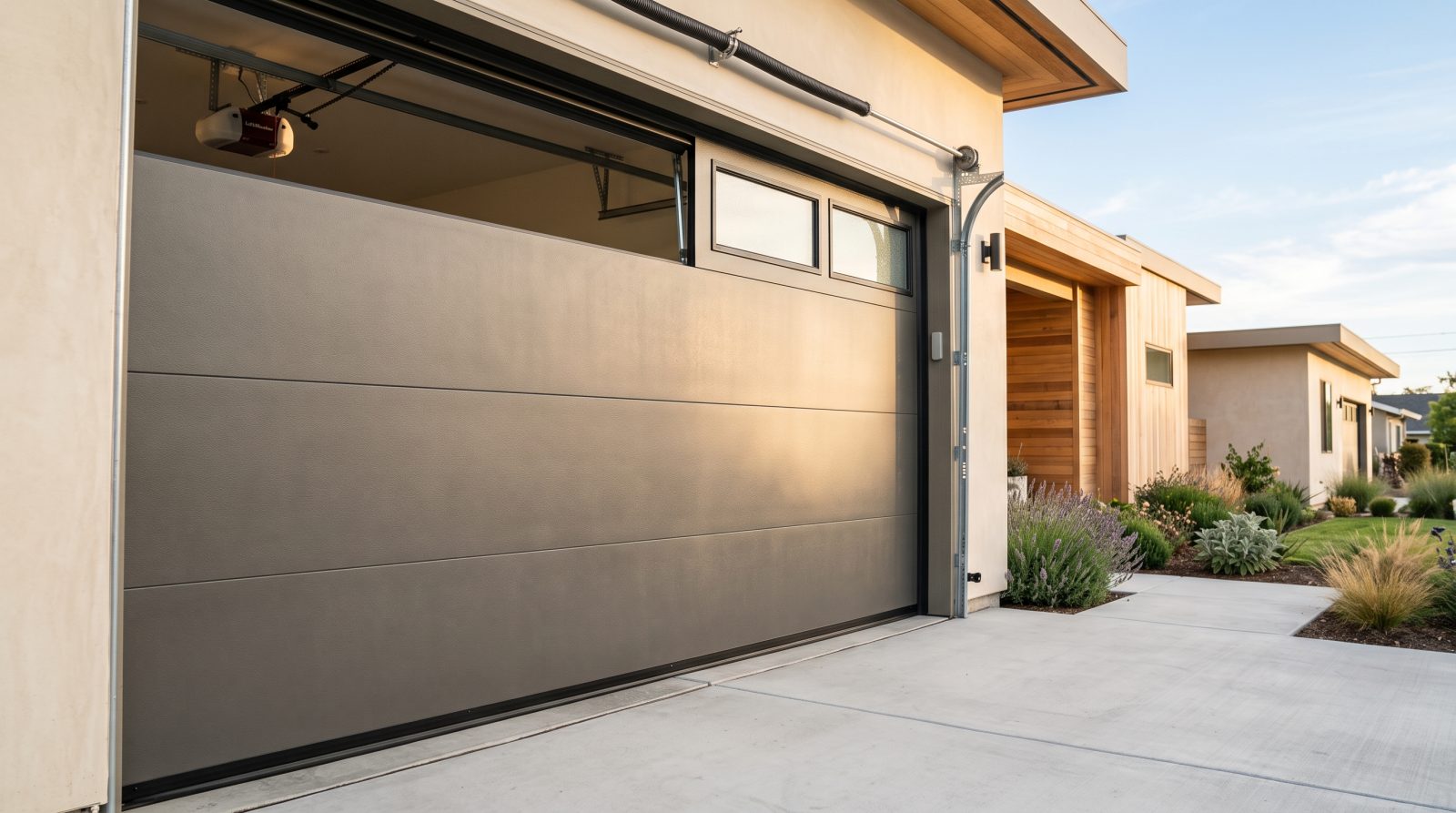
When a New Garage Door Makes More Sense Than a Repair
Not every problem calls for a full replacement, and an honest assessment usually starts by asking whether your existing door can be brought back to good working order. A single bent track, a worn roller set, a snapped spring, or a tired opener are typically repairs, not reasons to replace the whole system. Where replacement becomes the smarter long-term move is when the door itself is structurally compromised or fundamentally mismatched to how you use the space.
Common signals that point toward a new door rather than another patch include cracked or rotting wood panels, rust working through steel sections, sagging that throws the door out of square, repeated failures across multiple components in a short window, and single-layer doors with no insulation on a garage you now use as a gym, workshop, office, or laundry. Older doors can also lack modern safety features, and replacement parts for very old or discontinued models can be hard to source in a reasonable timeframe.
There is also a value angle. A new, well-chosen door noticeably lifts curb appeal, which matters in Bay Area neighborhoods where homes turn over and buyers notice the front elevation. If you are weighing a sale in the next few years, an attractive, properly insulated, quiet-operating door is one of the more visible upgrades a buyer registers from the curb. If you are unsure which path fits your situation, a straightforward inspection will tell you honestly whether a repair gets you several more good years or whether you are spending good money after bad.
How a Garage Door Is Measured (and Why Precise Sizing Matters)
Accurate measurement is the foundation of a clean install, and it is more involved than reading the width of the opening. A professional measure-up captures several dimensions and clearances, because a door that is even slightly off-size or a track layout that ignores your headroom will bind, gap, or simply not fit. This is exactly the kind of step that benefits from a we-come-to-you visit, since the right measurements depend on the real conditions inside your garage, not a generic standard.
Here are the core measurements and clearances a proper sizing covers:
After measurements, the right door type is matched to the opening. Sectional doors that roll up overhead are the most common residential choice, but ceiling obstructions, low headroom, or unusual framing can change the hardware needed. Getting this right up front is what prevents the most frustrating outcome of all: a door that was ordered to the wrong spec and has to be sent back.
- Rough opening width and height — measured at multiple points, since older Bay Area garages are rarely perfectly square
- Headroom — the space between the top of the opening and the ceiling, which determines spring type and whether standard, low-headroom, or specialty track is required
- Side room (backroom/jamb space) — the space on each side of the opening for vertical tracks and, on one side, the spring and opener hardware
- Backroom (depth) — how far the door needs to travel back along the ceiling when fully open
- Floor level and squareness — an out-of-level floor or twisted opening affects how the bottom seal contacts the ground and how evenly the door sits
Choosing the Right Door for Bay Area Conditions
Material and construction are where comfort, durability, and look come together. The Bay Area's mild but genuinely varied microclimates shape these choices more than people expect. A garage in a foggy, coastal-influenced pocket near the water faces salt-laden marine air and persistent damp that punish bare steel and unsealed wood, while an inland valley garage bakes in summer heat that makes insulation a real comfort factor for any attached or conditioned space. Choosing for your actual location, not a generic average, is the difference between a door that ages well and one that fights you.
The main material families each have honest trade-offs:
Insulation is worth special attention here. Doors are commonly built as single-layer (no insulation), double-layer (insulation bonded to a steel skin), or triple-layer (insulation sandwiched between two steel skins, the quietest and most rigid). For a detached garage you rarely heat, a single or double layer may be plenty. For an attached garage, a converted room, or a unit sharing a wall with living space, a higher insulation value meaningfully cuts noise and helps temperature stability in both the cool coastal mornings and the warmer inland afternoons. Hardware grade matters too: heavier doors and frequently used doors benefit from sturdier rollers, hinges, and a correctly sized spring system, which is where day-to-day quietness and longevity actually come from.
- Steel — the most popular choice for its strength, low maintenance, and wide range of finishes; choose corrosion-resistant construction and a quality finish if you are near the coast or in a damp, foggy zone
- Aluminum and glass (full-view) — light, modern, and resistant to rust, popular for contemporary Bay Area homes and a striking look, though large glass areas trade some privacy and insulation
- Wood and wood-composite — warm, high-end curb appeal that suits many Craftsman and traditional Bay Area homes; solid wood needs ongoing sealing and maintenance, while composites mimic the look with less upkeep
- Faux-wood (steel with a wood-grain finish) — the look of wood with the low maintenance of steel, a practical middle ground for damp climates
The Installation Process, Step by Step
A professional new garage door installation follows a deliberate sequence, and understanding it helps you see where the quality lives. The visible panels are only part of the job; the springs, tracks, balance, and opener integration are what make a door safe and quiet for years.
The typical sequence looks like this:
Throughout, the spring system deserves respect. Garage door springs are under extreme tension and store enough energy to cause serious injury if mishandled, which is the single biggest reason new door installation is not a casual DIY project. Proper winding, the correct spring size for the door's weight, and careful balancing are safety-critical steps, not optional finesse.
- Removal of the old door and hardware — panels, tracks, springs, and cables are taken down and the old system is hauled away, leaving a clean opening
- Inspection of the opening — the frame, jambs, and header are checked for rot, damage, or out-of-square conditions that need attention before the new door goes in
- Track and bracket installation — vertical and horizontal tracks are mounted to the framing, leveled, and aligned so the door travels smoothly
- Panel assembly — sections are set in place from the bottom up, hinged together, and fitted with rollers as they rise
- Spring and cable system — the correct spring system is installed and wound to the door's weight, then cables are routed so the door is properly balanced
- Balance and travel test — the door is checked to confirm it holds position when stopped partway and moves without binding before any opener is connected
- Opener setup and safety sensors — if an opener is included or reused, it is mounted, programmed, and the photo-eye safety sensors and auto-reverse are tested so the door reverses on an obstruction
- Weather sealing and final adjustment — bottom seal and perimeter weatherstripping are fitted, and the door is fine-tuned for a quiet, even close
- Walkthrough — operation, maintenance basics, and any included controls or accessories are reviewed with you
What to Expect on Installation Day
Most single-door residential installations are completed in a few hours, though the exact time depends on the door's size, weight, material, whether an opener is being added, and any prep the opening needs, such as repairing a rotted jamb. A two-car or oversized door, a heavy custom build, or extra carpentry can extend the window. Because we come to you, the work happens at your home or business with minimal disruption to the rest of your day.
A little preparation on your end makes the day go faster. Clear a working area in front of and inside the garage so panels and the old door can be moved safely, move vehicles out beforehand, and keep pets and children clear of the work zone since heavy components and tensioned springs are in play. If access is gated or street parking is tight, a heads-up helps. For commercial properties, coordinating around business hours and loading-dock or roll-up access keeps downtime to a minimum.
Once the door is in, expect a clear walkthrough: how to operate it, how to use the manual release in a power outage, what routine maintenance keeps it quiet, and how the safety reversal is supposed to behave so you can spot-check it yourself over time. A new door should open and close smoothly, sit evenly against the floor, and run noticeably quieter than a tired old system. On cost, treat any figures you research as typical industry ranges that vary widely by door size, material, insulation level, opener, and the condition of your opening; the only accurate number is one based on your actual door and garage. If you would like a clear, no-pressure assessment of options for your home or building, call for a free quote and we will come measure and walk you through the choices.