The Big Misconception: The Opener Doesn't Lift the Door
The single most useful thing to understand about a garage door is that the motorized opener mounted on your ceiling does very little lifting. A typical double door weighs somewhere in the range of 150 to over 350 pounds depending on material, insulation, and glass. A garage door opener motor is usually well under one horsepower. It simply does not have the muscle to hoist that kind of weight on its own, and it is not designed to.
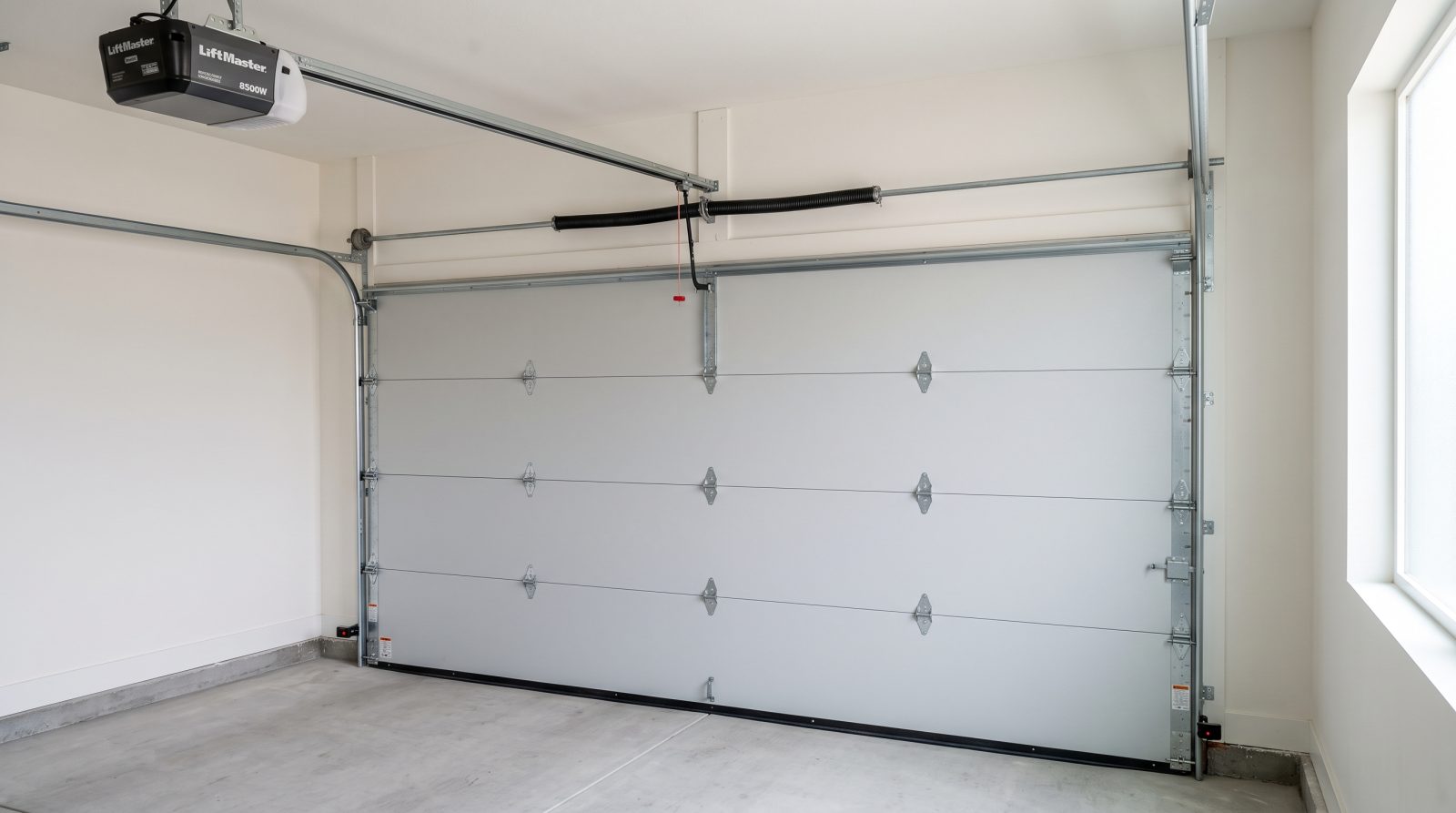
Instead, the heavy lifting is done by a spring system that stores and releases mechanical energy. When the door is closed, the springs are wound tight and loaded with tension. As the door rises, that stored energy is released to counterbalance the door's weight, so the door becomes nearly weightless when it is properly balanced. The opener's real job is just to nudge that balanced door along its path and hold it in position. This is why a healthy door can be lifted by hand with one or two fingers, and why a door that suddenly feels heavy almost always points to a spring problem, not an opener problem.
Grasping this distinction saves Bay Area homeowners money and frustration. People frequently replace a perfectly good opener because the door won't move, when the actual failure is a broken spring the opener was never meant to overcome. Knowing where the work happens tells you where to look when things break.
The Counterbalance System: Springs, Drums, and Cables
The counterbalance is the heart of the door, and it comes in two main designs. Torsion springs mount horizontally on a metal shaft above the door opening and store energy by twisting. Extension springs run parallel to the horizontal tracks along each side and store energy by stretching. Torsion systems are generally more durable, balance the door more smoothly, and are common on heavier and double-wide doors; extension systems are often found on older or lighter single doors.
Springs are rated by cycle life, where one cycle is a full open and close. Standard springs are commonly rated around 10,000 cycles, which sounds enormous until you count daily use. A busy household opening the door several times a day can reach that number in well under a decade, which is why springs are the most common wear item to fail. Cold, damp Bay Area mornings add a small amount of stress because metal is slightly more brittle when chilled, and coastal humidity accelerates corrosion that shortens spring life.
The springs don't connect to the door directly. On torsion setups, cables wrap around grooved drums at each end of the shaft; as the shaft turns, the drums wind the cables and lift the bottom of the door. These steel lift cables are under tremendous tension and are precisely matched to the door's weight and height. Springs and cables together form a tightly tuned energy system.
- Torsion springs: mounted on a shaft above the door, twist to store energy, smoother and more durable, common on heavier and double doors
- Extension springs: mounted along the side tracks, stretch to store energy, often on older or lighter single doors
- Lift cables: high-tension steel cables that translate spring energy into actual door movement
- Cycle life: many standard springs are rated near 10,000 cycles, often reached in years, not decades, with daily use
- Safety note: springs and cables hold enormous stored energy and are the parts most likely to cause serious injury if mishandled, which is why this is professional work
The Guidance System: Tracks, Rollers, Hinges, and Sections
A sectional garage door, the most common style today, is made of horizontal panels (sections) connected by hinges. This jointed design lets a tall, flat door bend around a curve and tuck up flat against the garage ceiling, which is essential in Bay Area garages where space is tight and many homes have living areas built above the garage.
The door's path is defined by two steel tracks, one on each side. The vertical portion guides the door up the wall, a curved radius section turns the corner, and the horizontal portion carries the door back along the ceiling. Riding inside those tracks are rollers, small wheels attached to each section by brackets and hinges. Good rollers, often nylon or sealed-bearing steel, let the door glide quietly; worn or rusty rollers cause grinding, jerking, and noise. Coastal salt air is hard on cheap rollers and unsealed bearings, so doors near the water tend to get noisy sooner.
The hinges between sections do double duty: they hold the panels together and allow the controlled flex needed to round the track's curve. When tracks are bent, misaligned, or loose, or when a roller jumps the track, the whole system binds. A door that closes crookedly, sticks at the same spot every time, or scrapes on one side is usually telling you something is off in this guidance system rather than in the springs or opener.
- Sections: hinged horizontal panels that let the door bend from vertical to horizontal
- Tracks: vertical, curved, and horizontal steel channels that define the door's path
- Rollers: wheels that ride in the tracks; quality rollers run quiet, worn ones grind and stick
- Hinges and brackets: hold sections together and allow controlled flexing around the curve
- Coastal factor: salt air corrodes low-grade rollers and hardware faster near the bay and ocean
The Opener: Drive Types, Travel Limits, and Force Settings
With the springs handling the weight, the opener can be a modest motor that moves a balanced door and parks it open or closed. Openers come in a few drive styles. Chain drives use a metal chain and are durable and economical but louder, a real consideration when the garage sits under a bedroom. Belt drives use a reinforced rubber belt for much quieter operation. Screw drives turn a threaded steel rod and sit in the middle on noise and maintenance. Newer wall-mounted (jackshaft) units mount beside the door on the torsion shaft, freeing up ceiling space and suiting garages with high or obstructed ceilings.
Two adjustable settings govern how the opener behaves: travel limits and force. Travel limits tell the opener exactly how far to move before the door is fully open or fully closed, so the door seats properly without slamming or stopping short. Force settings control how much pushing or pulling effort the opener applies before it decides something is wrong and reverses. These settings interact with door balance: if the springs weaken and the door gets heavy, the opener may strain against its force limit and reverse, which homeowners often misread as an opener defect.
Modern openers also add convenience and security layers, including rolling-code remotes that change the code with each use to resist code grabbing, keypads, battery backup so the door still works during the power outages that occasionally hit the Bay Area, and Wi-Fi modules for smartphone control and alerts. These are genuinely useful, but they sit on top of the same fundamental mechanics that have driven garage doors for decades.
- Chain drive: durable and affordable, but louder, less ideal under living space
- Belt drive: quiet operation, well suited to garages below bedrooms
- Screw drive: middle ground on noise and maintenance
- Wall-mount/jackshaft: mounts on the torsion shaft, frees ceiling space, good for high or obstructed ceilings
- Key settings: travel limits set how far the door moves; force settings decide when to reverse
The Safety Systems: Photo-Eyes, Auto-Reverse, and Manual Release
Because a closing garage door is heavy and powered, federal safety standards require automatic openers to include reversing protection. The most visible part is the pair of photo-eyes (photoelectric sensors) mounted a few inches off the floor on each side of the opening. They project an invisible infrared beam across the doorway. If anything breaks that beam while the door is closing, a pet, a child, a backpack, the opener immediately stops and reverses. Misaligned or dirty photo-eyes are one of the most common reasons a door refuses to close and then reverses, and the culprit is often just a bump, a spider web, or a smudge on the lens.
A second layer is mechanical auto-reverse based on resistance. If the door contacts an object on the way down and meets unexpected resistance, the opener senses the force and reverses. This is the system the force settings tune. Both protections should be tested periodically; a common test is placing a sturdy object flat on the floor in the door's path and confirming the door reverses on contact, and waving an object through the photo-eye beam to confirm it stops.
Finally, every automatic door has a manual release, usually a red cord hanging from the trolley. Pulling it disconnects the door from the opener so you can operate it by hand, which matters during a power outage or if the opener fails. Here the counterbalance shows its importance again: when the door is properly balanced, a disconnected door is easy to lift by hand, but if a spring is broken, that same door can be dangerously heavy and may slam down. That is why a door that is hard to move manually should be treated as a safety issue and inspected promptly.
- Photo-eyes: infrared beam near the floor that stops and reverses the door if the beam is broken
- Common no-close cause: misaligned, dirty, or obstructed photo-eyes, often an easy fix
- Force-based auto-reverse: door reverses when it meets unexpected resistance on the way down
- Manual release cord: disconnects the opener so you can operate the door by hand in an outage
- Balance check: a properly balanced door lifts easily by hand; a heavy one signals a spring problem
How the System Works as a Whole, and Why It Eventually Needs Service
Put the pieces together and a single press of the remote sets off a coordinated sequence. The opener receives the signal, the motor engages the drive, and the trolley begins to move the door. As it does, the springs release their stored energy through the cables and drums to counterbalance the weight, the rollers guide each hinged section through the curve of the tracks, the photo-eyes stand guard across the opening, and the travel limits tell the opener exactly when to stop. When you close the door, the process runs in reverse and the springs reload with tension for the next cycle. It is an elegant balance of stored mechanical energy and modest electric power.
Every part of that chain is a wear item operating under load, which is why even a good door eventually needs attention. Springs fatigue and break, cables fray, rollers and hinges wear and corrode, tracks drift out of alignment, and opener settings drift over time. Bay Area conditions push this along: coastal salt air corrodes hardware, fog and humidity invite rust, hillside and tuck-under garages add structural quirks, and the older housing stock across many neighborhoods often pairs aging doors with original hardware well past its rated cycle life.
The good news is that almost every symptom maps cleanly back to a part once you understand the anatomy. A heavy door points to springs. A noisy, jerky door points to rollers and tracks. A door that reverses before closing points to photo-eyes or force settings. A door that won't respond at all points to the opener, power, or remote. As a mobile service, we come to you anywhere across the Bay Area, diagnose which part of this system is failing, and keep the whole thing balanced and safe. If your door is acting up or simply overdue for a tune-up, call for a free quote.