How Rollers and Tracks Actually Work (and Why They Wear Out)
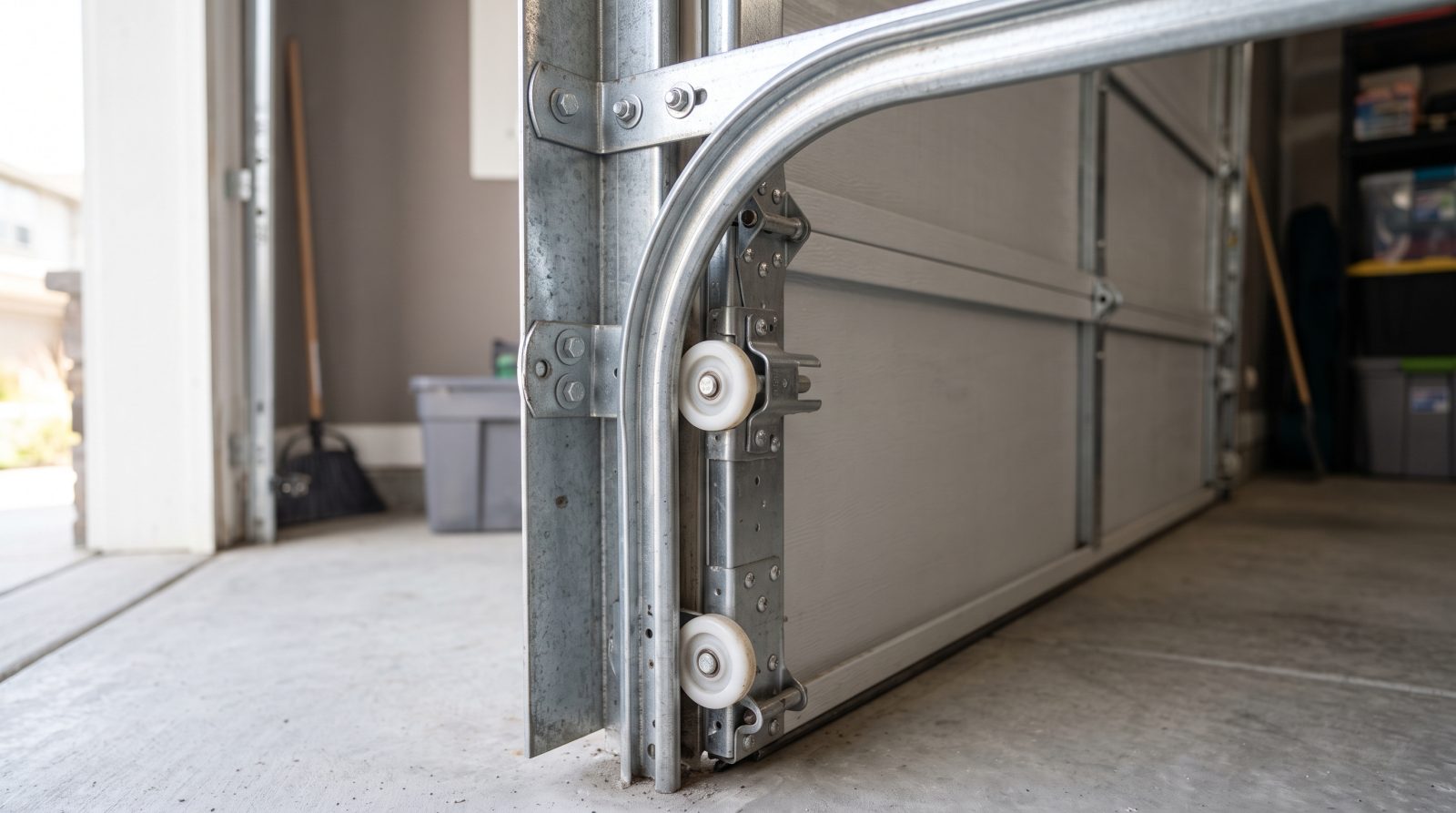
Your garage door doesn't lift in one solid piece. It's a series of hinged sections, and each side rides inside a steel track using small wheels called rollers. The vertical tracks guide the door straight up off the floor, then a curved section transitions it onto the horizontal tracks that carry it back over your head. The rollers are what let that heavy door glide along the metal instead of dragging against it. When the rollers and tracks are healthy, the door moves smoothly and quietly because the load is rolling, not scraping.
Rollers wear out because they're under constant pressure and motion. Builder-grade doors often ship with plastic or low-bearing-count steel rollers that flatten, crack, or seize over time. Once a roller stops spinning freely, it skids inside the track, chews up the wheel, and forces the door to fight its way along. Tracks bend or fall out of alignment from a bumped door, a minor vehicle tap, loose mounting brackets, or simply years of vibration loosening the hardware. Even a small misalignment changes how the rollers sit in the channel, which accelerates wear on everything else.
The Bay Area adds its own factors. Homes closer to the coast and the bay, from Pacifica to the Peninsula to the East Bay shoreline, deal with damp, salt-tinged air that quietly corrodes track surfaces and roller bearings, especially on doors that face the elements. Inland valleys like the Tri-Valley and South Bay swing hotter and drier, where dust and dried-out lubricant let metal grind on metal. Older housing stock, from Eichlers and mid-century ranch homes to vintage flats with detached garages, often still runs original or builder-grade hardware that's well past its comfortable service life.
Warning Signs Your Rollers or Tracks Need Attention
Most roller and track problems give you plenty of warning before they turn into a stuck or fallen door. Catching them early is almost always cheaper and safer than waiting for a failure, because a small misalignment left alone tends to damage hinges, the opener, and even the door panels over time.
Pay attention to how the door sounds and moves. A healthy door is relatively quiet and steady; a door that's developing roller or track trouble usually announces itself in a few recognizable ways.
- Grinding, squealing, or rumbling that's gotten louder over the past few weeks or months
- A door that shudders, hops, or moves in jerks instead of one smooth motion
- Visible gaps where a roller has come partly out of the track, or a roller that wobbles
- Tracks that look bent, dented, twisted, or pulled away from the wall
- A door that catches or hangs up at the same spot every time
- Loose, rattling track brackets or bolts you can see or hear
- Black dust or metal flakes along the track, a sign of rollers grinding
- The opener working visibly harder, straining, or reversing partway
What a Proper Roller and Track Repair Involves
A real repair starts with diagnosis, not parts. When we arrive, the first step is to run the door through its full travel and watch where it binds, listen for where the noise originates, and check the tracks for level and alignment along the whole length. A lot of what gets blamed on a bad opener is actually a roller or track issue forcing the opener to overwork, so getting the root cause right matters.
From there, the typical work falls into a few categories depending on what we find. Worn rollers get replaced, ideally with sealed-bearing nylon or quality steel rollers that run quieter and last far longer than builder-grade plastic. Bent or out-of-true tracks are straightened where that's appropriate, or replaced if the steel is creased or kinked badly enough that it won't hold a clean channel. Misaligned tracks get reset to proper plumb and spacing and the mounting brackets retightened so they stay put. Hinges and fasteners that have loosened or worn get addressed at the same time, because they're part of the same guidance system.
Lubrication is the finishing step that people most often skip, and it's the cheapest insurance there is. The rollers, hinges, and bearings get a proper application of the right lubricant so the door runs quietly and the new parts don't burn out early. We also re-check the door's balance and travel after the work, because rollers and tracks that are now moving freely can reveal a spring or opener adjustment that needs a small tweak to finish the job cleanly.
- Full-travel diagnosis to find where the door binds and what's causing it
- Replacing worn, cracked, or seized rollers with longer-lasting sealed-bearing options
- Straightening or replacing bent, dented, or kinked track sections
- Re-aligning tracks to proper plumb and spacing and resecuring brackets
- Tightening or replacing worn hinges and loose fasteners along the door
- Lubricating rollers, hinges, and bearings for quiet, smooth operation
- A final balance and travel check so the whole system moves as one
Repair, Replace, or Upgrade: Making the Right Call
Not every noisy door needs the same fix, and a trustworthy answer depends on what's actually worn. If the tracks are sound and only the rollers are tired, a roller replacement plus alignment and lubrication often transforms how the door sounds and moves for relatively little. If a track is genuinely creased or kinked, straightening can be a false economy because the channel won't run true again, and replacing that section is the durable choice.
Upgrading is worth considering when the door is otherwise in good shape but was built with the cheapest possible hardware. Swapping flat plastic rollers for quality nylon sealed-bearing rollers is one of the highest-value, lowest-cost improvements you can make to an older door. It cuts noise dramatically, which matters a lot if there's a bedroom over or beside the garage, and it reduces strain on the opener so the whole system lasts longer. For coastal Bay Area homes fighting salt air, corrosion-resistant hardware can meaningfully extend the time between repairs.
As a general guide on cost, these are typical industry ranges and estimates that vary, not a quote: a straightforward full set of roller replacements often falls in roughly the low-to-mid hundreds of dollars depending on the door's size and the roller quality chosen, while track straightening or section replacement varies more widely with the extent of the damage and how many sections are involved. Your actual price depends on the door, the materials, the access at your property, and the scope of what's found on site, which is exactly why we look at the real door before giving you a number.
Why a Mobile Bay Area Service Makes Sense for This Repair
Roller and track work is hands-on and door-specific, which makes it a natural fit for a mobile service. There's no benefit to you in hauling anything anywhere; the door stays where it is and we bring the diagnosis and the repair to your driveway. We serve homeowners and businesses throughout the San Francisco Bay Area, from San Francisco and the Peninsula down through the South Bay and across the East Bay, and we work on residential doors, detached garages, and commercial overhead doors alike.
Because the Bay Area's housing is so varied, matching the repair to the door matters. A heavy custom wood door on a Berkeley craftsman, an insulated steel sectional on a newer South Bay build, and a roll-up at a small commercial unit all have different hardware and tolerances. Diagnosing the right roller and track solution for each one is the difference between a quiet door that lasts and a repeat repair. We come prepared to handle the common Bay Area door styles and the realities of tight driveways, shared garages, and older framing.
If your door is grinding, jerking, hanging up, or starting to come off its track, the safest move is to stop forcing it and have it looked at before a worn part takes the rest of the system with it. Reach out to Bay Area Garage Door and call for a free quote, and we'll come to you, find the real cause, and get the door running smooth and quiet again.