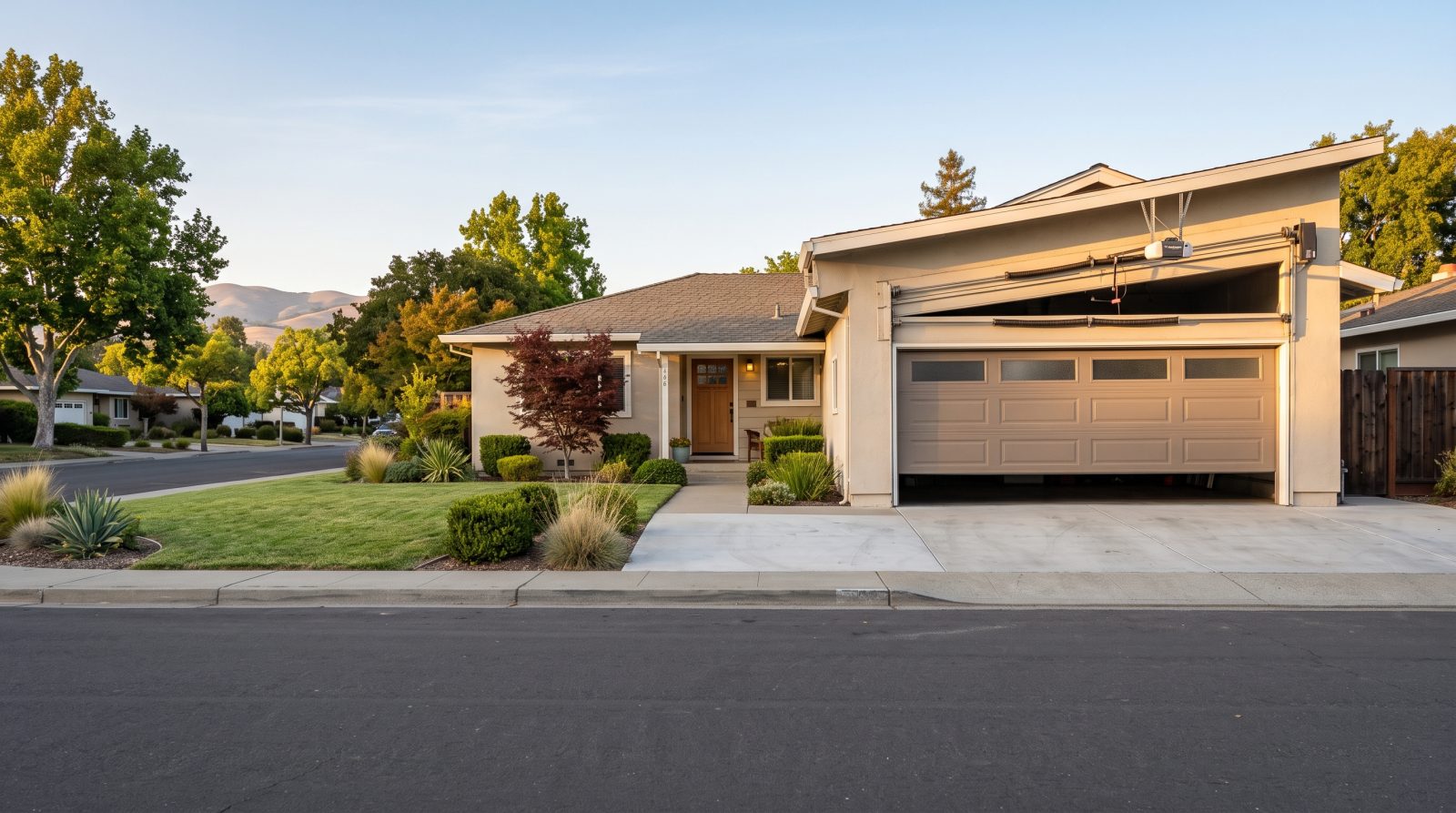
Mobile garage door service across every Fremont neighborhood
Fremont is large and spread out, stitched together from five historic districts and decades of newer development, and that variety shows up in its garage doors. The bungalows and older homes around Niles and Centerville often have shorter, narrower openings, original wood or early steel doors, and older opener units that predate modern safety features. The big tract neighborhoods in Ardenwood, Warm Springs, Weibel and the Mission San Jose hills lean toward wide double doors, taller openings for SUVs, and insulated steel sections. A mobile service is the right fit for this kind of city because the fix happens in your driveway, on your schedule, without you wrestling a heavy door into a truck or waiting on a shop across town.
Because we carry the common parts on the van, most repairs are handled in a single visit. We diagnose the actual problem on site, show you what failed, and give you the options in plain language before any work starts. There is no storefront and no waiting room here, just a stocked van that comes to your address anywhere in Fremont and the surrounding Bay Area.
- Niles, Centerville and Irvington: older, often narrower openings, legacy openers and original wood or light steel doors
- Mission San Jose and the Weibel/hill neighborhoods: wider double doors, sloped driveways and taller openings
- Ardenwood and the north side: insulated steel tract doors with high daily cycle counts
- Warm Springs, Tesla corridor and newer builds: modern openers, smart features and heavier insulated sections
- Commercial and light-industrial bays near the Auto Mall and Pacific Commons: roll-up and sectional service doors
Common garage door problems we see in Fremont homes
The single most common emergency call in Fremont is a broken torsion spring. That tightly wound spring above the door carries almost the entire weight of the panels, and it has a finite lifespan measured in cycles, not years. In a busy household where the garage door is the main entrance, eight to twelve open-and-close cycles a day adds up fast, and many doors hit their rated life within a handful of years. When the spring snaps you'll usually hear a loud bang, find the door too heavy to lift, or see the opener straining and reversing because it can no longer pull the dead weight. Spring replacement is not a safe DIY job: the stored energy can cause serious injury, so it should always be done with the right winding bars and technique.
Fremont's relatively warm, dry inland climate is easier on doors than the fog belt closer to the coast, but it brings its own wear. Long stretches of dry heat dry out the rollers, hinges and the rubber bottom seal, so doors get louder and the weather strip cracks and lets in dust and the occasional draft. Sun exposure on west- and south-facing doors fades and can warp lighter panels over time. We also see a steady stream of opener failures, off-track doors from a car bumping the rail or a snapped cable, frayed lift cables, worn rollers, and bent track from minor impacts in tight side-by-side driveways.
- Broken or worn torsion/extension springs, the top emergency call
- Opener failures: dead motor, stripped gears, faulty logic board, or a remote/keypad that stopped working
- Door off track, snapped or frayed lift cables, and bent or misaligned track
- Loud, grinding operation from dry or cracked rollers and hinges
- Cracked, hardened or missing bottom seal and weather stripping
- Sagging, dented or sun-faded panels, and doors that no longer close evenly
Repair, tune-up, or full replacement: how to decide
Most doors do not need to be replaced. A door that is mechanically sound but noisy, slow, or occasionally balky is usually a repair or a tune-up, not a teardown. A proper tune-up means balancing the door so it holds position at the halfway point, adjusting the spring tension, replacing worn rollers, lubricating the moving parts with the right product (not WD-40, which attracts grit), tightening hardware, and checking the safety reversal and photo-eye sensors. That alone quiets most doors and extends their life by years, which is the cheaper and smarter first move.
Replacement makes sense when the panels themselves are failing, when the door is so old that parts are hard to source, or when you simply want a better-insulated, quieter, better-looking door, which matters in Fremont where the garage often faces the street and drives a lot of the home's curb appeal. If you're weighing it, we'll give you an honest read on whether your existing door has good years left or whether your money is better spent on a new one. As a rough guide, typical industry pricing for a spring replacement commonly falls in the low-to-mid hundreds of dollars, a new opener installed is often a few hundred, and a full new door installed frequently lands in the four-figure range depending on size, material and insulation. Treat all of those as ballpark estimates that vary widely by door, material, scope and current conditions, never a fixed quote; we give you a clear price after we see the door in person.
- Lean toward repair: door is straight and solid but noisy, slow, off-balance, or has a single failed part like a spring, cable or roller
- Lean toward a tune-up: everything works but it's getting loud or sluggish, schedule it before something breaks
- Lean toward replacement: cracked or rotted panels, repeated failures, obsolete parts, or you want insulation, quiet and better curb appeal
- Always ask for the diagnosis first: a good tech shows you the failed part and explains why, never upsells a whole door over a cheap fix
New garage door and opener installation built for Fremont conditions
When you do replace, the choices that matter most in Fremont are insulation, material and opener type. Insulated steel doors are the workhorse here: they're durable, low-maintenance, hold up to dry inland heat and sun, and the insulation noticeably cuts noise and helps moderate temperature in garages that double as gyms, workshops, offices or playrooms, which is common in this area. Steel resists the warping that can affect lighter single-layer doors on hot, sun-baked elevations. For homeowners chasing a specific look, faux-wood and full-overlay carriage-house styles deliver the warm aesthetic that fits Mission San Jose and the older districts without the upkeep of real wood.
On the opener side, modern belt-drive units are dramatically quieter than older chain drives, which matters when there's a bedroom over the garage, a setup you'll find in plenty of two-story Fremont homes. Smart openers add phone control, alerts and the ability to let in a family member or delivery remotely, and battery backup keeps you moving during a power outage. We size the opener to the weight and height of your door, set the travel and force limits correctly, and test the safety reversal so the door stops and reverses on contact. Every install ends with a full safety and balance check, not just a quick on-off test.
- Insulated steel: the durable, quiet, low-maintenance default for Fremont's dry heat and sun
- Faux-wood and carriage-house styles: real wood looks for Mission San Jose and the historic districts, without the maintenance
- Quiet belt-drive openers: ideal where there's living space above the garage
- Smart and battery-backup openers: phone control, alerts and operation during outages
- Correct sizing, force/travel calibration and a verified safety reversal on every opener we install
Garage door maintenance and safety for the long Fremont dry season
A garage door is a high-tension machine and the safety hardware is not optional. Two systems do the protecting: the photo-eye sensors near the floor that stop and reverse the door if anything crosses the beam, and the door's own auto-reverse that backs off when it meets resistance. Both should be tested periodically; the classic check is to lay a solid object like a roll of paper towels in the door's path and confirm it reverses on contact. If your door doesn't reverse, or the sensors only work intermittently, that's a same-day fix worth making, especially in homes with kids, pets or anyone parking close.
Fremont's long dry stretches make a little routine maintenance go a long way. Twice a year, lubricate the rollers, hinges and springs with a proper garage-door lubricant, wipe down and inspect the bottom seal for cracks, and check that the door stays balanced and holds at the halfway point. Keeping the tracks clear of the fine dust and debris that builds up in dry weather prevents premature roller wear and the grinding noise that comes with it. Catching a frayed cable, a loose hinge or a tired spring early is the difference between a quick planned service and an emergency on a Monday morning. If you'd rather not climb a ladder near a loaded spring, that's exactly the kind of visit we make. Call for a free quote and we'll come to you anywhere in Fremont.
- Test the photo-eye sensors and the auto-reverse regularly, both are critical safety systems
- Lubricate rollers, hinges and springs twice a year with the right product, never WD-40
- Inspect and replace the bottom seal and weather stripping as it dries out and cracks
- Keep tracks clear of dry-season dust and debris to prevent roller wear and noise
- Never adjust or replace a torsion spring yourself, the stored energy makes it genuinely dangerous