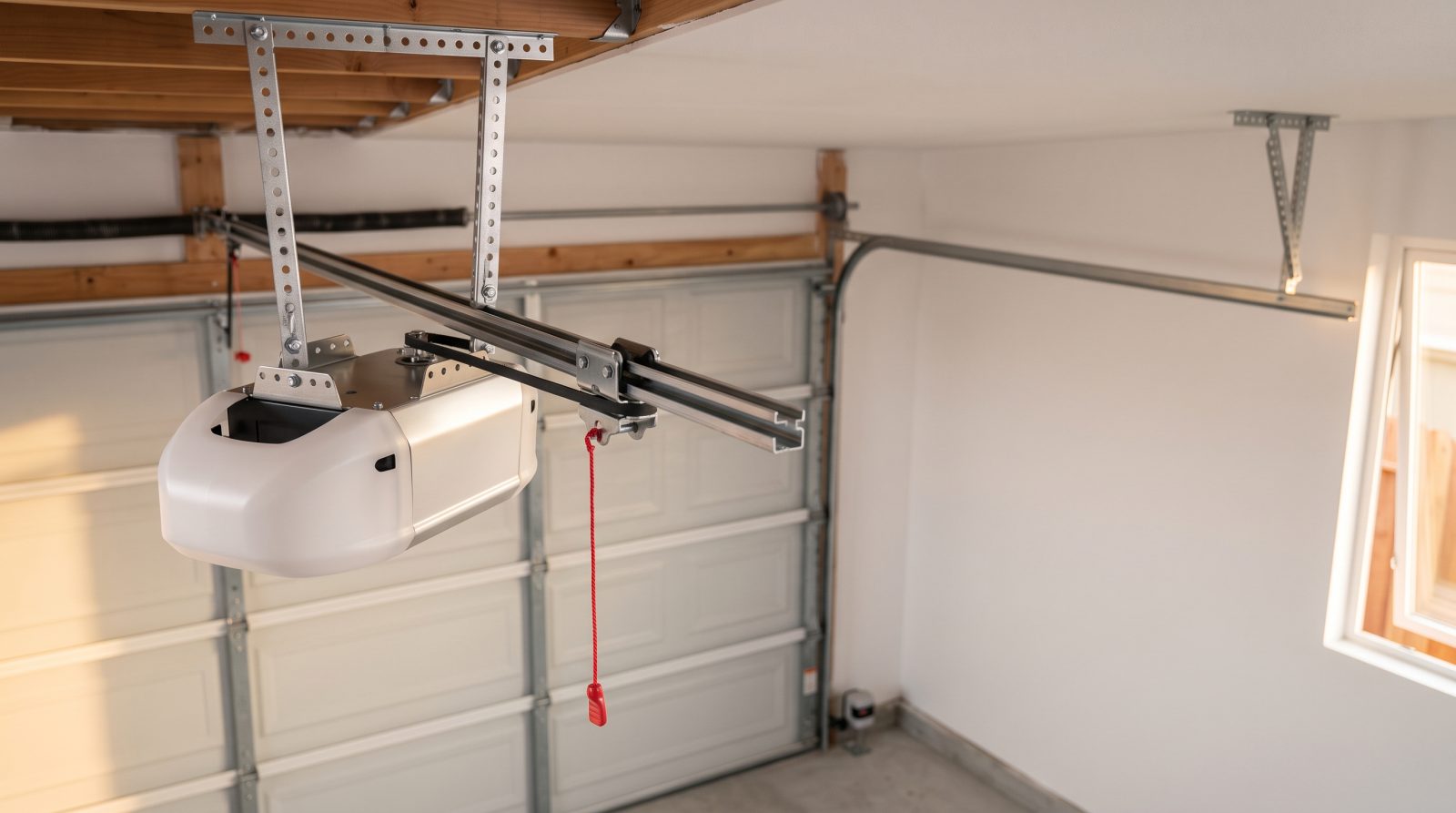
Typical Garage Door Opener Cost Ranges in 2026
Garage door opener pricing has two parts: the opener unit itself and the labor to install it. Below are typical industry ranges for the Bay Area. Treat them as estimates, not quotes — your actual price depends on the drive type, the brand and horsepower you select, the smart features you want, and what the installer finds once the old unit comes down. Material and labor costs in the Bay Area tend to sit toward the higher end of national ranges, which is reflected here.
For a straightforward like-for-like replacement on a healthy door, most homeowners land in the lower-to-middle part of these ranges. The higher end usually involves heavier doors, premium quiet-drive units, additional accessories, or extra labor to correct problems that were never the opener's fault in the first place.
- Chain-drive opener, supplied and installed: roughly $400 to $650 — the budget workhorse, reliable but louder.
- Belt-drive opener, supplied and installed: roughly $500 to $850 — quieter operation, popular for garages under bedrooms or living space.
- Direct-drive / screw-drive opener, installed: roughly $550 to $900 — fewer moving parts, smooth and low-maintenance.
- Wall-mount (jackshaft) opener, installed: roughly $700 to $1,300+ — mounts beside the door to free up ceiling space, ideal for high or vaulted garages.
- Opener unit alone (no install): roughly $180 to $500 depending on horsepower, drive type, and smart features.
- Basic professional installation labor on its own: roughly $150 to $350 for a standard swap.
What Actually Drives the Price Up or Down
Two homes on the same street can get very different opener invoices, and it's rarely about the installer trying to upsell. The cost is shaped by physics and the condition of your existing hardware. Understanding these factors helps you read a quote intelligently and spot where you genuinely have choices.
Door weight and size matter most. A standard single-car door pairs happily with a 1/2-horsepower opener, but a heavy double-wide door, a solid-wood door, or an insulated steel door common on Bay Area homes often calls for 3/4-horsepower or a DC motor with more torque — which costs more but lasts longer and runs cooler. Drive type is the next big lever: chain is cheapest, belt is quieter, and wall-mount units carry a premium because of the bracket hardware and the extra steps to relocate the motor off the ceiling.
- Horsepower needed: 1/2 HP suits most single doors; 3/4 HP or DC motors are common for heavy double or solid-wood doors.
- Smart features: built-in Wi-Fi, camera, battery backup (required by California law on residential installs), and smartphone control add to the unit price.
- Wiring and outlets: if there's no ceiling outlet near the opener, adding power adds labor or an electrician.
- Door condition: worn springs, frayed cables, or bad rollers force the opener to work against a fighting door — fixing these is a separate but often necessary cost.
- Old hardware removal and haul-away of the dead unit.
- Rail length: extra-tall doors need an extension kit beyond the standard 7-foot rail.
California Battery Backup: A Cost Factor You Can't Skip
One Bay Area reality worth budgeting for: California law (SB-969) requires that residential garage door openers sold and installed in the state include a battery backup so the door can still open during a power outage. After years of wildfire-season public safety power shutoffs across Northern California, this isn't just a legal box to tick — it's genuinely useful here, where a planned outage can leave a garage-only-entry home locked out of its own cars.
In practice this means the bargain-basement opener you might see advertised out of state isn't a legal install option here. Compliant units cost a little more, and the backup battery is a wear item that typically needs replacing every few years. Build that into your long-term thinking rather than being surprised by it later. The upside is real peace of mind during fire-season shutoffs and winter storm outages.
Repair or Replace? How to Decide
Not every misbehaving opener needs replacing. Many issues that feel like a dying motor are actually cheap fixes — dead remote batteries, misaligned safety sensors (the little eyes near the floor), or a logic board that needs resetting. Before you spend on a new unit, it's worth having the actual cause diagnosed, because a $20 sensor realignment and a $500 replacement can look identical from the homeowner's side of the garage.
The rough rule of thumb: if your opener is more than 10 to 15 years old, lacks the safety features now standard (and now legally required), and is facing a repair that costs a meaningful fraction of a new unit, replacement is usually the smarter money. Newer openers are dramatically quieter, more secure against code-grabbing, and far more energy-efficient. If the unit is newer and the fault is a single failed component, a targeted repair almost always wins.
- Lean toward repair: opener under ~10 years old, single failed part, safety sensors or remotes are the issue.
- Lean toward replacement: opener 10–15+ years old, recurring failures, no rolling-code security, no battery backup, or a cracked main gear/board.
- Always get the real diagnosis first — a strange noise or a door that won't stay closed is often the springs or sensors, not the motor.
- Factor in noise: if your garage sits under a bedroom, upgrading from an old chain unit to a belt or direct drive is often worth it on quality-of-life alone.
How to Get the Best Value on a Bay Area Opener Install
The cheapest opener is rarely the cheapest decision over five years. A slightly better motor matched correctly to your door's weight will outlast an underpowered budget unit that strains on every cycle. The smartest spend is usually on right-sizing the horsepower and choosing a drive type that fits how your garage is used, rather than chasing the lowest sticker price.
A few practical moves keep costs sensible without cutting corners. Bundle obvious related work — if your rollers are shot or a spring is on its last legs, doing it during the opener install saves a second service trip. Ask whether the door itself is balanced before the new opener goes on, because an unbalanced door shortens the life of any motor you bolt to it. And because we're mobile and come to you across the Bay Area, you're not paying for a showroom in your install price. When you're ready, call for a free estimate.